Embark on a once-in-a-lifetime Wildebeest Migration Safari to witness the incredible display of nature's wonders of the world.


Masai Mara
Mount Kenya
Embark on a thrilling adventure with our comprehensive guide to Mount Kenya climbing, the second tallest peak in Africa.
Mount Kilimanjaro
Discover the thrill to Mount Kilimanjaro climbing with our expert guides. Conquer the highest peak in Africa and create lasting memories.
Lake Nakuru
Experience an unforgettable birding adventure at Lake Nakuru National Park in Kenya and witness flamingos and other birds in their natural habitat.
Hell's Gate
Venture on a thrilling Hells Gate biking safari and explore the beauty of nature on two wheels enjoying the stunning landscapes and wildlife.
Zanzibar
Indulge in a luxurious escape with our Zanzibar beach holiday package. Relax on pristine beaches, enjoy crystal-clear waters, and immerse yourself in the beauty of this tropical paradise.
Car Hire
Looking to rent a car in Kenya? Our Kenya car hire services provide top-notch vehicles for hire at competitive rates. Book now and experience a hassle-free journey in Kenya.



Climb Mount Kilimanjaro
Overview
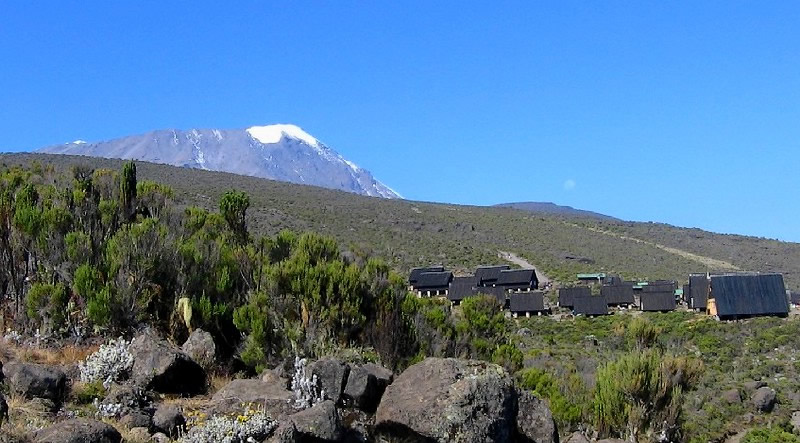
Join us for an adventurous mountaineering experience as we embark on a journey to climb Mount Kilimanjaro via the Marangu route. The expedition will span five days, allowing ample time to savor the hike and conquer the heights to reach the summit of Africa. Whether you prefer to join a group or undertake the hike solo, our experienced climbing crew is prepared to accompany you on this thrilling adventure.
Mount Kilimanjaro, Africa’s highest mountain, towers at an impressive 5,895 meters above sea level and is affectionately known as “the roof of Africa.” This iconic mountain is renowned for its three distinct summits; Shira, Kibo and Mawenzi, symbolizing the grandeur of the African continent.
Our hiking experiences are designed for adventurous individuals seeking the thrill of conquering Mount Kilimanjaro while being immersed in awe-inspiring panoramas along the way. Reaching the summit of Kilimanjaro is a remarkable achievement and a must-have experience on any adventurer’s bucket list. Ascending the heights of this magnificent mountain requires determination and adequate acclimatization to minimize the risk of altitude sickness.
Planning Logistics
The team at Kenya epic safaris is involved in every step of the planning, preparation and packing of our expeditions. Behind the scenes we take care of all the nighty grities to ensure a smooth ripple effect for the purpose of a successful Climb of Mount Kilimanjaro.
Mountain guides & porters
Our mountain guides and porters are highly skilled in mountaineering, with years of experience climbing Mount Kilimanjaro. They are not only highly trained and certified, but also very knowledgeable, playing a key role in ensuring a successful climb to the summit. In addition, you will also have the opportunity to enjoy the company of our professional guides and porters as you climb Mount Kilimanjaro.
Accommodation
Accommodation on the mountain varies on the route a climber chooses. There are permanently built mountain huts and designated camping sites. Our guides have selected various hotels for overnight stays close to the base of the mountain to ensure acclimatization and above all avoid mountain sickness.
Meals & Drinks
As part of our team; we have a dedicated professional cook who prepares excellent, delicious and healthy meals. Our cook will ensure a diverse menu accommodating different tastes and appetites. The menu consists of high protein foods, carbs, vegetables and fruits. Equally important we cater for special dietary requirements with advance notice at no extra charge. You are advised to bring your favorite snacks / energy bars.
You only require bottled water on the first and last day however on the mountain we will boil water or add purifying tablets then filter using MSR water filtering pump before refilling in your water bottles every morning.
Transport Logistics
Expeditions to Mount Kilimanjaro typically commence from Arusha or Moshi. We arrange transportation from your hotel to the park’s entry point. The mode of transport we offer is determined by the number of people, their budget and preferences. If you are located in Nairobi, we can pre-arrange a shuttle coach to Arusha or Moshi.
Call To Action
Initiate your ideal climbing experience by contacting our team. We are here to provide you with essential information, outline what to expect and offer guidance. Reach out to us today to begin your adventure with our venture to climb Mount Kilimanjaro. We aim to help you realize your travel aspirations.

- Nairobi Excursions.
- Mombasa Excursions.
- Hell's Gate Day Trip.
- Lake Nakuru Day Trip.
- Mount Longonot Day Trip.
- Amboseli Camping Safari.
- Masai Mara Camping Safari.
- Masai Mara / Lake Nakuru Budget Safari.
- Climbing Mount Kenya Sirimon Route.
- Climbing Mount Kilimanjaro Machame Route.
- Hiking Mount Kilimanjaro Marangu Route.
Five Days Mount Kilimanjaro Climb Marangu Route. [Itinerary]
Day One: Moshi – Mandara Hut
First, a representative from Kenya epic safaris will meet you at your hotel or pick you up from the airport. Secondly, the rep will brief and hand you over to your assigned mountain guide, who will facilitate your climb to Mount Kilimanjaro.
Before you depart, the mountain guide will provide you with a detailed briefing about what to expect and will also check if you have the appropriate gear for the journey. Following the briefing, you will leave Moshi, you will be driven to Marangu gate for registration before beginning the climb through the rainforest to Mandara hut, located at an elevation of 2700 meters above sea level.
From the low rim of Mandara hut, you will have a clear view above the trees and may be able to see the main summit, although it is likely to be cloud-capped in the afternoon. You will have dinner and stay overnight at Mandara hut, experiencing the unique atmosphere of the rainforest surroundings.
[Time: 5 hours] Covering twelve kilometres.
Day Two: Mandara Hut – Horombo Hut
Start the day with a delicious breakfast before beginning the climb, ascending through the moorland and Maundi crater to reach Horombo hut, which sits at an elevation of 3720 meters above sea level.
Upon reaching Horombo, the temperature noticeably drops, so it’s essential to have a fleece jacket or sweater with you. Additionally, this is the point where altitude sickness may be experienced. The day concludes with dinner and an overnight stay at Horombo hut.
[Time: 6 hours] Covering fifteen kilometres.
Day Three: Horombo Hut – Kibo Hut
Your day begins with a hearty breakfast before embarking on a hike through the Alpine forest towards the ‘Last Water Point’ where it’s important to refill your water bottles. As you make your way to Kibo Hut, situated at an impressive 4703 meters above sea level, the majestic peak comes into view.
It’s common to experience headaches at this altitude and the nighttime temperatures can be extremely cold. Conclude the day with a nourishing dinner and spend the night at Kibo Hut, taking in the remarkable surroundings.
[Time: 6 hours] Covering fifteen kilometres.
Day Four: Kibo Hut – Uhuru Peak – Horombo Hut
Today, you will be facing the most challenging part of the climb. It’s important to wake up very early, around midnight and have a light breakfast comprising coffee or tea along with some biscuits. The ascent to Uhuru Peak, which stands at 5895 meters above sea level, begins from here.
The initial part of the Summit trail involves navigating a rocky path leading to the Hans Meyer Cave at 5150m, serving as a convenient resting spot as well. Subsequently, the path zigzags its way up to Gillman’s Point at 5681m, situated on the crater rim. This particular stretch is characterized by a very steep terrain with a significant amount of stone scree, demanding a considerable physical and mental exertion.
Gillman’s Point marks the beginning of encountering snow all the way up to Uhuru Peak at 5895m, the highest point in Africa. Following a photo or selfie session, the descent to Kibo Hut takes approximately 3 hours where breakfast will be served, followed by a brief rest before descending further to Horombo Hut, where dinner and overnight stay await after another 3 hours of descent.
[Time: 14 hours] Covering twenty seven kilometres.
Day Five: Horombo Hut – Moshi
As you approach the final part of your adventure, start your day with a delightful breakfast before making your way down to Marangu gate through Mandara hut. At Marangu gate, you’ll complete the necessary formalities and receive a summit certificate to commemorate your achievement.
Climbers who reach Gillman’s Point (5685m) are honored with green certificates, while those who conquer Uhuru Peak (5895m) are awarded with prestigious gold certificates. Afterwards, you’ll be transferred to Moshi and check in to your hotel, marking the conclusion of your Mount Kilimanjaro climb. Finally, following the exhilarating climb, take the opportunity to indulge in a refreshing hot shower and well-deserved rest to rejuvenate yourself.
[Time: 7 hours] Covering twelve kilometres.
End of services.
- What's Included
- What's Excluded
- Transport to and from the base of the mountain.
- Park entrance fees.
- Accommodation in mountain huts / camps.
- Meals as described in the itinerary.
- Services of a mountain guide, porters & a cook.
- Rescue fee.
- H.F Radio communication for backup in case of an emergency.
- All government taxes.
- International airfares.
- Climbing equipments.
- All expenditure of personal nature such as telephone calls, hard drinks, soft drinks and laundry.
- Tips.
- Visas.
- Travel Insurance.
Mt. Kilimanjaro Accommodation
- Mandara Hut
- Horombo Hut
- Kibo Hut
Mandara hut is a group of wooden huts in a forest clearing. Each has 6-8 sleeping bunks with solar generated lighting. The total capacity of the camp is 60 climbers.
Water is piped into the camp from springs above and there are flush toilets behind the main hut.
Horombo hut is a village of huts perched on a small plateau, with buildings similar to Mandara, but with a total capacity of 120 climbers.
Horombo is normally bustling with hikers, guides and porters, with an atmosphere of adventure and excitement.
Kibo hut is a a stone build block house which has bunk beds for 60 climbers, but no streams with water nearby. It is however possible to buy mineral water and soft drinks at the camp office. There are platform toilets behind the hut.
Mt. Kilimanjaro Climbing Route
- Marangu Route " Coca Cola Route"
Marangu route is often considered the shortest and easiest route for climbing Mount Kilimanjaro to reach the summit. Approximately 90% of climbers choose to use this route due to its popularity. It offers a very scenic experience and boasts a well-defined path for hikers.
Accommodation along this route consists of mountain huts, providing a unique lodging experience amidst the natural surroundings. This route stands out as the only one that offers comfortable sleeping huts equipped with beds and mattresses at every campsite. Additionally, all the camps along the Marangu route are equipped with radio contact with the Park Headquarters, ensuring communication and safety measures.
Mount Kilimanjaro Topography
- Zones
- Climate
Mount Kilimanjaro vegetation zones are characterized by tropical forest, open moorland, alpine desert and finally rocks and ice fields. From 1850 m – 2800m we have the montane forest. The area is usually damp or wet due to rainfall. Notably there isn’t a bamboo forest on Mount Kilimanjaro. From 3200m the montane forest paves way for moorland which extends beyond the heath.
The nights in this zone are cold while the days are sunny and the air thins. Giant groundsels and lobelia thrive in this zone. The moorland paves way to the Alpine desert at 4000m, this zone is characterized by minimal vegetation, the sand is loose and the weather is intense. Above 5000m there isn’t any vegetation and all you can find are rocks and ice fields.
Mount Kilimanjaro is only 3 degrees south of the equator and is influenced by the passage of the Inter-tropical convergence zone. There are two rainy seasons. The long rains occur from March to the end of May and the short rains occur from October to November, but can extend into December.
Apart from these factors, climbing Kilimanjaro remains fairly constant throughout the year. The maximum rainfall occurs in the forest belt, where it can reach up to 2000 mm per year. At the summit, which can be described as a “high altitude desert”, the rainfall is less than 100 mm per year. Rain and snow at higher altitudes can however be encountered at any time of the year.
The average temperatures at the foot of the mountain are 25° – 30° C and on the summit, it can range from minus 10° – 20° C. At 3000m the day temperatures range from 5° – 15° C, and at night frost is normally encountered; clearly a large variation, making it more interesting to summit the mountain.
Mount Kilimanjaro National Park
The Park
Africa’s highest mountain and the world’s highest free standing mountain, Mt Kilimanjaro which is also referred to as “The Roof of Africa” stands at 5895 meters above sea level. The mountain is a dormant volcano and has three outstanding peaks namely shira at 3962m, Mawenzi at 5149m and kibo at 5895m. Uhuru Peak is the highest summit on Kibo’s crater rim.
Kilimanjaro is a giant stratovolcano that began forming a million years ago, when lava spilled from the Rift Valley zone. Two of its three peaks, Mawenzi and Shira, are extinct while Kibo (the highest peak) is dormant and could erupt again.
Mt. Kilimanjaro History
The last major eruption has been dated to 360,000 years ago, while the most recent activity was recorded just 200 years ago. Although it is dormant, Kibo has fumaroles that emit gas in the crater. Scientists concluded in 2003 that molten magma is just 400 m (1,310 ft) below the summit crater. Several collapses and landslides have occurred on Kibo in the past, one creating the area known as the Western Breach.
Kilimanjaro was first climbed in 1889 by German geographer Hans Meyer and Austrian mountain climber Ludwig Purtscheller. There are six routes that one can use to climb the mountain namely Marangu, Mweka, Umbwe, Machame, Shira and Rongai. Only four of these routes are commonly used.
Climbing / Hiking Gear & Equipments
- Climbing Clothes
- Hiking Footware
- Hiking Equipment
- Personal Items
- Optional Items
- Walking trousers synthetic material is recommended.
- Long Underwear Tops – Light synthetic.
- Women’s sports bras Synthetic material.
- Light fleece with a warm layer.
- Long sleeve polypropylene shirt.
- Medium weight polypropylene/thermal leggings.
- Wind – waterproof – breathable jacket.
- Gloves- light weight.
- Warm Hat or Balaclava Sun hat – wool or synthetic.
- Face mask or neck gaiter.
- Medium or large duffel bag to pack your town clothes with a lock, this can be left at the hotel or we can store them for you.
- Medium duffel bag to pack your hiking stuff with a lock. [ The porter will carry this bag. ]
- A day pack to store your essentials with a capacity of about 25 to 35 liters is recommended.
- Walking/hiking shoes – comfortable and waterproof.
- Socks – Fitting socks one thick and one thin pair.
- Head lamp with extra batteries & bulbs.
- Adjustable trekking poles.
- Sleeping bag – Rated 3 – season.
- Gaiters – make sure they will fit over boots.
- Purification tablets or filters – water for drinking is fetched from mountain streams.
- Water bottle preferably one litre.
- Female or male hygiene supplies.
- Hand wipes and camp towel.
- Personal toiletry kit.
- Suncream.
- Lip balm.
- Sun glasses.
- Camera & extra battries.
- Passport, flight ticket, travel insurance, visa, cash & credit card.
- Basecamp entertainment i.e books, board games, playing cards or ipod.
- Favorite Snacks, candy bars or protein bars.
- Bandanas.
Do's & Dont's At Mt. Kilimanjaro
Do's & Dont's At Mt. Kilimanjaro
- Do not Litter the park.
- Do not feed the animals, i.e. monkeys or baboons.
- Do give the animals the right of way and do not disturb wildlife.
- Do not take any plant or animals remains, dead or alive.
- Do not start fires or throw cigarettes in the parks/reserve.
- Do stay in your vehicle except at designated viewing points.
- Do not shout, laugh loudly, honk or play loud music as this will keep away the animals.
- Do not provoke any animals; it’s dangerous.
Food for thought
Food for thought
Kindly don’t forget your patience, have an open mind, positive and relaxed attitude as things in this part of the world may be very different to what you are accustomed to but in the end the experience is price less and will always be memorable.